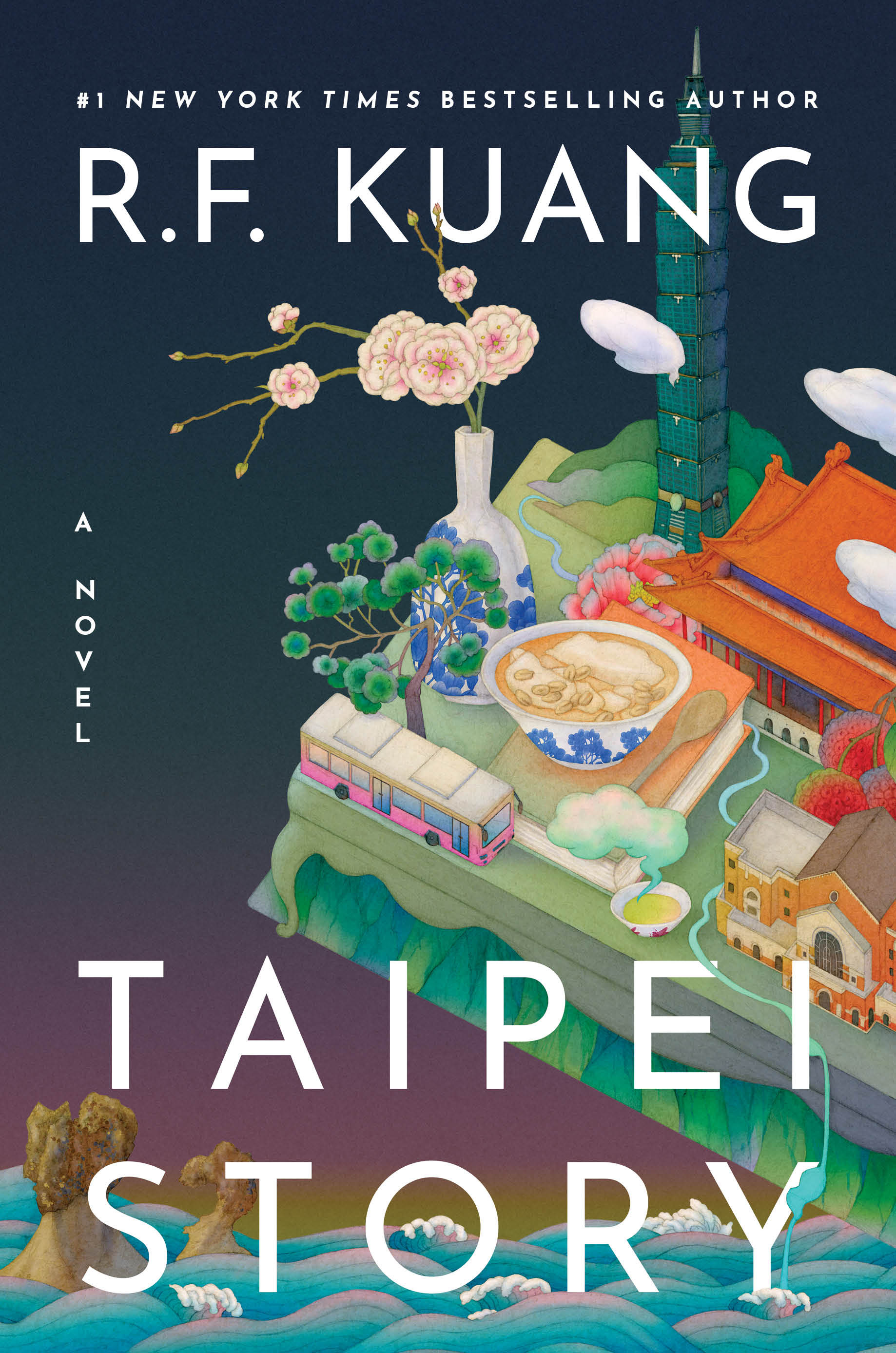
Taipei Story: R.F. Kuang Explores Culture Shock & Diaspora Challenges
In the vibrant tapestry of contemporary literature, few authors have captured the imagination and critical acclaim quite like R.F. Kuang. Known for her masterful blend of fantasy, history, and sharp social commentary in works like *The Poppy War* trilogy and *Yellowface*, Kuang now turns her prodigious talent to a deeply personal and universally resonant coming-of-age story: *Taipei Story*. This novel offers a wryly humorous yet profoundly moving exploration of grief, language, and the often-disorienting reality of culture shock, all set against the unforgettable backdrop of a summer in Taipei.
For fans of R.F. Kuang, *Taipei Story* represents a fascinating evolution, showcasing her versatility as she delves into contemporary issues of identity and belonging. The book doesn't just tell a story; it asks essential questions about what it means to search for roots, to grieve what might have been, and to ultimately define "home" on one's own terms. The journey of its protagonist, Lily Chen, offers a mirror to countless Chinese American students and members of the diaspora who grapple with the complexities of their heritage.
The Heart of "Taipei Story": Navigating Culture Shock and Identity
At the core of *Taipei Story Rf Kuang* is the immersive, often overwhelming experience of culture shock. We meet Lily Chen, a college freshman, as she embarks on an intensive language program in Taipei. Like many Chinese American students before her, Lily arrives with a hopeful, almost romanticized vision of connecting with a culture she inherited but never fully understood. She anticipates a seamless integration, a comforting sense of belonging that will finally bridge the gap between her American upbringing and her ancestral roots.
However, the reality quickly unravels her expectations. Kuang masterfully portrays the subtle yet pervasive alienating forces Lily encounters: the grueling pace of her language classes, the maddening eccentricities of her roommate, and a seemingly innocent trip to the hot springs that ignites a firestorm of vicious gossip among her peers. These incidents, though seemingly minor, compound to create a profound sense of isolation. Lily finds herself adrift, a foreigner in a country she had optimistically believed would feel like home. This powerful narrative arc directly confronts the "diaspora fantasy of homecoming" – the yearning for an effortless return to one's heritage, only to find oneself more displaced than ever.
Kuang's depiction of Lily's disillusionment rings true for many second-generation immigrants. There's immense pressure to "fit in" or prove one's cultural authenticity, yet the lived experience can be vastly different from the imagined one. The novel subtly highlights how cultural nuances, social cues, and even the pace of life can become invisible barriers, leading to frustration and a deep sense of inadequacy. For anyone who has felt the sting of cultural alienation, *Taipei Story* offers a validating reflection. It underscores that it's perfectly normal for expectations not to align with reality, and that the journey of cultural connection is often fraught with missteps and complicated emotions.
Grief, Language, and Unanswered Questions
Beyond the immediate challenges of culture shock, *Taipei Story Rf Kuang* takes a poignant turn with the sudden news of Lily's grandfather's passing. This profound loss acts as a powerful catalyst, forcing Lily to grapple with a new layer of complexity: now-unanswerable questions about her family history and identity. The unasked questions, the stories untold, and the silences maintained within her family suddenly become gaping voids. As Lily navigates her grief, she embarks on a journey of self-discovery, piecing together fragmented memories and stories in often hilarious, yet devastating, attempts at connection.
One of the novel’s most incisive inquiries revolves around language itself: "What if learning a language can’t bring you any closer to the people you’re trying to reach?" Lily's struggle with Mandarin isn't just academic; it's a deeply personal battle to unlock a part of her heritage that feels just beyond her grasp. Kuang eloquently illustrates how language is more than just words; it’s a vessel for shared history, cultural understanding, and emotional resonance. When that vessel feels incomplete, the struggle to connect with family, to truly understand their perspectives and experiences, can be heartbreakingly difficult.
Moreover, the novel bravely confronts the challenge of inherited history and family silence. "What if you search for your family’s history, but your family doesn’t want to share?" This question resonates with many who have attempted to unearth their family's past, only to be met with resistance, protective silence, or even a desire from older generations to simply move forward. *Taipei Story* also asks, "What if you wait too long to ask the right questions?" – a poignant reminder of the ephemeral nature of time and the urgency of seeking understanding from our elders while we still can.
This aspect of Kuang's narrative provides invaluable insights into the intergenerational dynamics within diaspora families. The novel implicitly encourages readers to consider the importance of documenting family stories and actively engaging with older relatives, even when topics are sensitive or difficult. The journey of grief, intertwined with the search for identity, ultimately pushes Lily to redefine what home means to her, going beyond geographical location to encompass self-understanding and acceptance. For a deeper dive into these themes, consider reading
R.F. Kuang's Taipei Story: Unpacking Identity, Grief, and Homecoming.
R.F. Kuang's Evolving Narrative and Intellectual Rigor
R.F. Kuang's journey to becoming one of the most celebrated authors of her generation is remarkable. Having skyrocketed to literary fame at just 22 with *The Poppy War*, she has since cultivated a reputation for intellectually rigorous and emotionally powerful storytelling. Her academic background, including a master's in Chinese Studies from Cambridge and Contemporary Chinese Studies from Oxford, along with her current PhD candidacy at Yale, profoundly shapes her work. Kuang seamlessly blends fantasy, historical analysis, and linguistic insight, but with *Taipei Story*, she demonstrates her ability to apply this intellectual toolkit to a more intimate, contemporary setting.
Kuang herself emphasizes that her novels are a reflection of her growth and "a way to process" the constant shifts in her life and the "next big question mark." However, she is also meticulous about maintaining a healthy boundary between herself and her fictional personalities. Kuang famously resists weaving too much of her personal experience directly into her novels, and she avoids creating characters who completely align with her own beliefs. She states that "the most boring kind of writing is when the author is so sure of their beliefs that they want to preach to the reader."
Instead, Kuang is committed to constructing fully realized, three-dimensional characters who are often flawed, confrontational, and morally ambiguous. Lily Chen in *Taipei Story* is a prime example of this philosophy. She makes mistakes, she struggles, and her journey is far from linear or prescriptive. This commitment to portraying complex humanity, rather than idealized versions, is precisely what makes Kuang's work, and particularly her
From Poppy War to Taipei Story: The Evolution of R.F. Kuang's Themes, so compelling and resonant. It allows readers to engage with the characters' struggles on a deeper level, finding truths in their imperfections and ambiguities, rather than simply being told what to think.
Practical Insights for Navigating Diaspora Identity
*Taipei Story Rf Kuang* offers more than just a captivating narrative; it provides a framework for understanding and navigating the complexities of diaspora identity. For individuals experiencing similar journeys, here are some actionable insights:
* **Embrace the "In-Between":** It's okay to feel like you don't perfectly belong to any one culture. Many in the diaspora exist in a unique space that blends multiple influences. This hybrid identity is a strength, not a weakness.
* **Define "Home" for Yourself:** Home doesn't have to be a fixed geographical location or a singular cultural ideal. It can be a feeling, a community, a set of values, or even a continuous journey of self-discovery.
* **Seek Community and Shared Experiences:** Connecting with others who share similar cultural backgrounds or diaspora experiences can provide immense validation and support. Shared stories can illuminate common struggles and triumphs.
* **Engage with Your Heritage Actively, and Patiently:** Learning a language, exploring history, or practicing cultural traditions can be challenging. Be patient with yourself and celebrate small victories. Understand that connection might not be immediate or perfectly fulfilling.
* **Encourage Intergenerational Dialogue:** If possible, ask older family members about their lives, their pasts, and their experiences. Even if they are reluctant at first, persistent and respectful inquiry can sometimes open doors to invaluable stories. Consider recording these conversations.
Conclusion
*Taipei Story* by R.F. Kuang is a powerful and necessary addition to contemporary literature. It skillfully navigates the turbulent waters of culture shock, the profound ache of grief, and the enduring quest for identity within the diaspora experience. Through Lily Chen's often-tumultuous summer in Taipei, Kuang poses deeply resonant questions about belonging, communication, and the elusive nature of "home." As R.F. Kuang continues to challenge and provoke thought with her intellectually rich and emotionally vibrant narratives, *Taipei Story* solidifies her position as a masterful storyteller capable of capturing the nuanced complexities of the human condition. It is a book that will undoubtedly spark conversations and offer solace to anyone who has ever felt like a foreigner in a place they thought should be home.