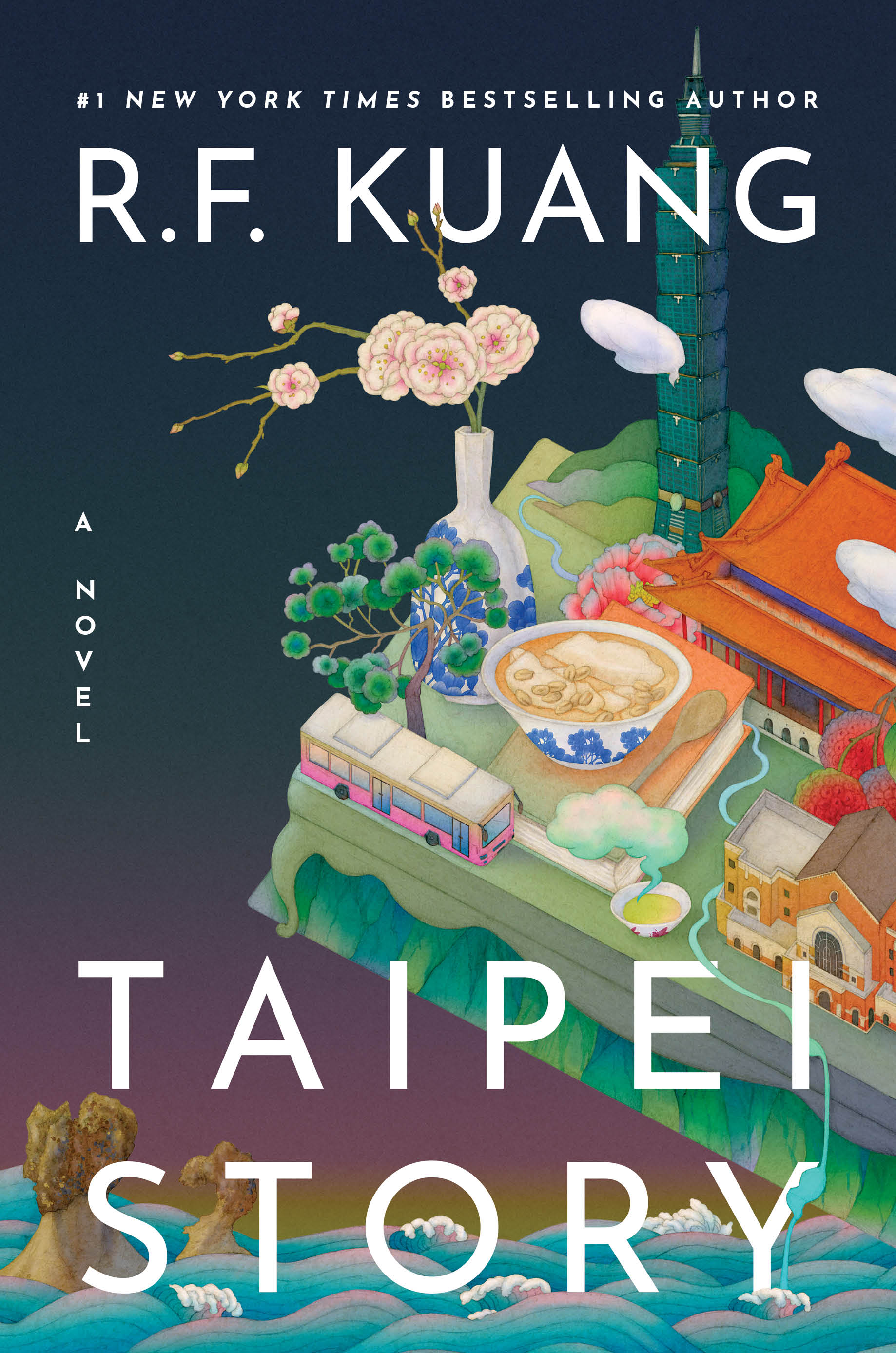
R.F. Kuang's Taipei Story: A Profound Dive into Identity, Grief, and the Elusive Meaning of Home
R.F. Kuang, the #1 *New York Times* bestselling author celebrated for epic fantasy sagas like *The Poppy War* and the incisive satire *Yellowface*, now invites readers on a deeply personal and exquisitely rendered journey with her latest novel,
Taipei Story Rf Kuang. This coming-of-age narrative, infused with wry humor and profound emotion, unpacks the intricate layers of identity, the weight of grief, and the often-unfulfilled promise of homecoming, all set against the vibrant, complex backdrop of Taiwan's capital. More than just a story, it’s an exploration of what it truly means to connect with a heritage that feels both intrinsically yours and yet utterly foreign.
A Freshman's Unscripted Summer in Taipei: When Diaspora Fantasy Meets Reality
At the heart of
Taipei Story Rf Kuang is Lily Chen, a Chinese American college freshman embarking on an intensive language program in Taipei. Like countless diaspora students before her, Lily arrives with a hopeful vision: to bridge the gap with the culture she inherited but never fully grasped. Her expectation is a seamless reconnection, a homecoming that solidifies her sense of self.
However, the reality of her summer quickly diverges from this idealized "diaspora fantasy." The language classes prove grueling, her roommate becomes a source of exasperation, and a seemingly innocent trip to the hot springs with a near-stranger spirals into vicious gossip among her classmates. Lily finds herself increasingly adrift, a foreigner in a country she desperately wished would feel like home. This disconnect is a powerful portrayal of culture shock, not just as an external phenomenon but as an internal rift that challenges one's very sense of belonging. The novel brilliantly captures the awkwardness, the misunderstandings, and the profound loneliness that can accompany the search for cultural roots when expectations clash with lived experience.
This initial struggle highlights a universal truth for many in the diaspora: the romanticized idea of "going back" often overlooks the complexities of cultural assimilation, generational divides, and the simple fact that places change, and so do people. For a deeper look into these challenges, you might be interested in
Taipei Story: R.F. Kuang Explores Culture Shock & Diaspora Challenges.
Grief, Memory, and the Search for Ancestral Echoes
Just as Lily grapples with feeling like an outsider, a devastating blow arrives: news of her grandfather’s passing. This sudden loss dramatically shifts the trajectory of her summer. The initial struggles with language and social navigation are now compounded by an aching grief and a sudden urgency to understand her family's history – a history now punctuated by unanswerable questions.
Lily’s journey transforms from one of external cultural assimilation to an internal quest for self-discovery, intricately woven with her family's past. She begins piecing together fragmented memories, unspoken stories, and profound silences, often through a series of "hilarious and devastating attempts at connection." The novel masterfully blends these moments of light and shade, reflecting the bittersweet nature of grief and discovery. The grandfather's death becomes a catalyst, forcing Lily to confront not just her personal sorrow, but also the broader implications of lost history and the fragile threads that connect generations.
The book asks poignant questions: What if you search for your family’s history, but your family doesn’t want to share? What if you wait too long to ask the right questions? This aspect of
Taipei Story Rf Kuang resonates deeply with anyone who has faced the challenge of uncovering their heritage, especially when elders are gone, or uncomfortable sharing their past. It’s a powerful reminder of the preciousness of intergenerational stories and the imperative to seek them out before they fade.
R.F. Kuang's Masterful Lens on Identity and Belonging
R.F. Kuang's approach to storytelling is as remarkable as her meteoric rise in the literary world. Having achieved fame at 22 with *The Poppy War*, she has cultivated a reputation for intellectually rigorous and emotionally resonant narratives. Her background as a PhD candidate at Yale, with master's degrees from Cambridge and Oxford in Chinese Studies, deeply informs her work. She blends fantasy, history, culture, and linguistics into her texts, creating worlds and characters that are rich in detail and complex in their motivations.
Kuang herself notes that her writing is a way to "process all of this" – the constant shifts and questions in her own life. Yet, she maintains a healthy boundary between her personal experiences and her fictional creations. She resists the urge to insert herself or preach her beliefs through her characters, stating, "I don’t ever put all of myself in my characters, and I also never create a character who completely agrees with me because that feels like lazy storytelling." Instead, she crafts fully realized, three-dimensional individuals with flawed views, who are confrontational, and often morally ambiguous. This commitment to authenticity ensures that Lily Chen's struggles and revelations in
Taipei Story Rf Kuang feel incredibly real and universally relatable.
The transition from her epic fantasy roots to the more intimate, contemporary setting of
Taipei Story Rf Kuang showcases the evolution of Kuang's thematic explorations. While her earlier works might have grappled with war and power, this novel delves into the internal battles of identity and belonging. Readers interested in tracing this development can learn more in
From Poppy War to Taipei Story: The Evolution of R.F. Kuang's Themes.
Navigating the Nuances of Homecoming and Heritage
Taipei Story Rf Kuang asks fundamental questions about what constitutes "home." Is it a physical place, a language, a family history, or an internal feeling? For Lily, Taipei initially represents a hoped-for anchor, a place where she believes she will finally feel whole. Yet, her experiences reveal that home is far more intricate and elusive, often requiring a reconciliation with imperfect realities rather than a discovery of perfect ideals.
The novel's exploration of language is particularly insightful. Lily's intensive language program symbolizes her effort to build bridges to her heritage. But Kuang subtly questions: What if learning a language can’t bring you any closer to the people you’re trying to reach? This highlights the limits of language as a sole conduit for connection, especially when emotional barriers, generational gaps, and unspoken histories exist.
Practical Insights for Readers:
- Embrace Complexity: Recognize that identity and belonging are rarely straightforward. "Taipei Story" encourages readers, especially those from diasporic backgrounds, to validate their own nuanced experiences rather than striving for an idealized sense of "home."
- Ask Questions, But Respect Silences: Lily’s journey underscores the importance of seeking out family stories. However, it also gently reminds us that some questions may remain unanswered, and some silences may be protective. The act of asking, and the attempt at connection, can be as valuable as the answers themselves.
- Find Humor in the Devastation: Kuang masterfully intersperses moments of genuine humor amid Lily's grief and cultural struggles. This reflects real life, reminding us that even in the most challenging times, there can be lightness and unexpected joy.
- Consider the "Signed Edition": For fans of R.F. Kuang, the novel's release included a signed edition, a tangible piece of this celebrated author's evolving literary journey.
In essence,
Taipei Story Rf Kuang is a poignant search for understanding – of oneself, one's family, and the ever-shifting definition of what it means to belong. It’s a book that acknowledges the yearning for connection that many feel, while honestly portraying the challenges of truly achieving it.
Conclusion
R.F. Kuang's *Taipei Story* stands as a testament to her versatile talent and her profound understanding of the human condition. Through Lily Chen's raw and relatable experiences, the novel meticulously unravels the complexities of identity, the isolating weight of grief, and the often-disillusioning path to homecoming for those navigating dual cultures. It's a poignant, humorous, and deeply introspective narrative that prompts readers to reflect on their own connections to family, language, and the places they call home. By daring to ask difficult questions without offering simplistic answers, Kuang solidifies her position as a masterful storyteller who continues to push the boundaries of contemporary literature.